
Vertical Surface Scaler
What It Points To
Section titled “What It Points To”The higher the wall, the quieter it gets. On a rock face or an ice climb, there is no option to be anywhere else — no distraction survives the exposure. The body takes in the surface the way others take in a sentence. You’d see this in the free-solo climber who moves faster and more precisely the higher the route gets.
Integration property: Reads the rock and moves the body together, even when a fall would hurt
Card Universe
Section titled “Card Universe”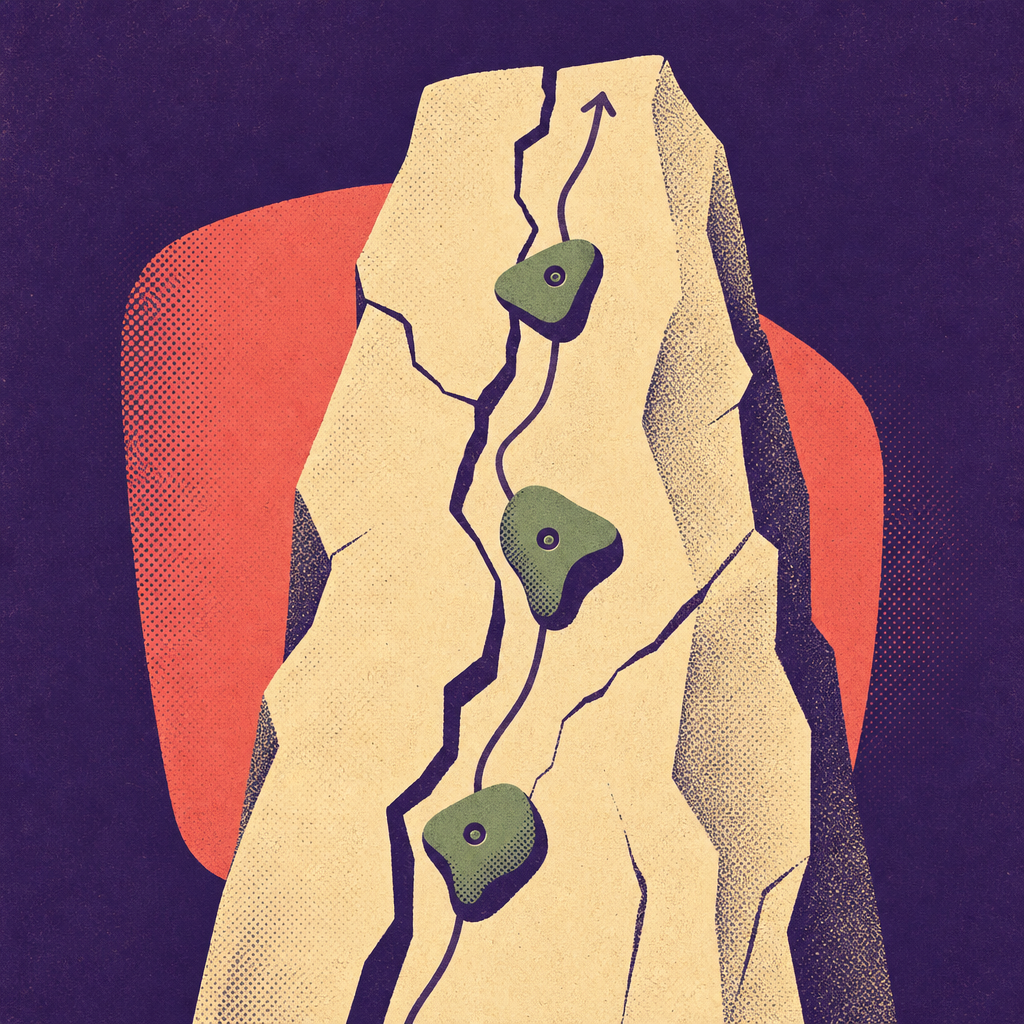
Card role: Route Reader
A compact visual role is available for this archetype.
A fuller Card Universe story has not been written yet.
Ingredients
Section titled “Ingredients”Multiple Natures (MNs)
- Adventurous Nature
Multiple Intelligences (MIs)
- Gross Bodily Intelligence
- Fine Bodily Intelligence
- Interpersonal Intelligence
- Spatial Visual Intelligence
- Intrapersonal Intelligence
- Naturalistic Intelligence
Active Traits
Section titled “Active Traits”
high power and endurance
thinks in volumes and routes
drawn to risk and exposure
long-arc patient
reads natural systems
Adjacent NatureTypes
Section titled “Adjacent NatureTypes”Where It Shows Up
Section titled “Where It Shows Up”Careers
Section titled “Careers”- Mountain guide (primary) - Sustained vertical movement on technical terrain is the job’s core demand
- Rock climbing instructor (primary) - Teaches others to read rock, manage fear, and progress incrementally up sequences—transfers embodied vertical knowledge.
- Arborist (primary) - Climbing technique applied to tree structure; same bodily and spatial demand at height
- Search and rescue technician (mountain) (primary) - Navigates steep terrain under time pressure, reads rock hazards, executes precise movement to extract people from exposure.
- Wildland firefighter (hotshot crew) (secondary) - Gross-bodily endurance on rough terrain + adventurous pull; less vertical technical demand
- Steeplejack / high-work rigger (secondary) - Executes complex rigging and repairs at height; vertical movement is means, not end—reduces the intrinsic pull of the climb itself.
- Structural inspector (towers, bridges) (secondary) - Assesses load-bearing geometry at height; presence on structure is observational rather than movement-based—removes the kinetic core.
- Expedition photographer (secondary) - Shares the terrain access demands; creative and entrepreneurial substrates added
- Park ranger (adjacent) - Monitors terrain and guides visitors through landscape; vertical navigation is occasional, embedded in broader stewardship role.
- Outdoor education teacher (adjacent) - Educative pull added; technical climbing demand reduced
- Route-finding on technical rock or ice (primary)
- Placing and checking protection gear (cams, nuts, ice screws) (primary)
- Reading rock quality, ice condition, and incoming weather (primary)
- Moving across exposed terrain with full body weight on holds (primary)
- Building and equalizing an anchor at height (primary)
- Training on a climbing wall for a specific route (secondary)
- Evaluating and selecting technical gear for a route (secondary)
- Briefing a partner on the climbing sequence and objective hazards (secondary)
- Leading a hiking group on marked trail (adjacent) - Gross-bodily + naturalistic, but lower stakes and no vertical demand
Hobbies and activities
Section titled “Hobbies and activities”- Sport climbing (primary)
- Bouldering (primary)
- Alpine mountaineering (primary)
- Via ferrata (primary)
- Ice climbing (primary)
- Caving / spelunking (secondary) - Bodily + spatial demand underground; adventurous pull present; less vertical
- Free solo scrambling (secondary)
- Slacklining (secondary)
- Trail running (adjacent) - Gross-bodily endurance + terrain; no vertical or fine-grip demand
- Orienteering (adjacent) - Spatial-visual + naturalistic; no vertical exposure
Life roles
Section titled “Life roles”- Risk-taker (early adulthood) (primary) - Adventurous pull peaks before consequences are weighted
- Expedition member or leader (primary)
- Mentor to newer climbers (secondary) - Educative pull added; the Climber type teaches through doing alongside
- Elder who still moves in the mountains (secondary) - Active, not advisory — the Climber retires into slower terrain, not off-terrain