
Weaver
What It Points To
Section titled “What It Points To”Groups make more sense to this person when the right people are placed near each other. They are not just keeping the peace. They notice who helps whom think better, then move people so the work holds together. You’d spot this in the classmate who pairs two quiet people for a project, then watches the whole table begin to work.
Integration property: The figure shows up one row at a time, at a pace nothing else in the maker’s life moves at
Card Universe
Section titled “Card Universe”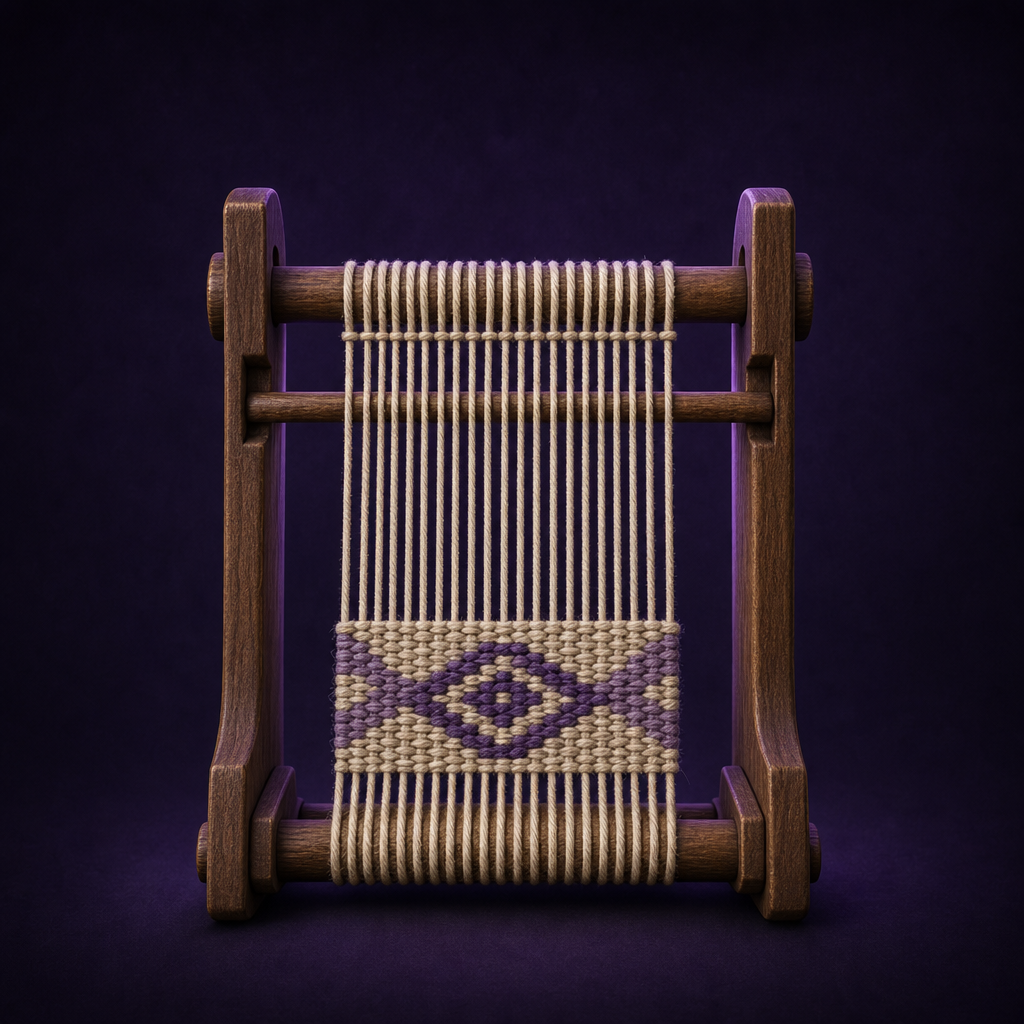
No Card Universe role has been assigned yet.
Ingredients
Section titled “Ingredients”Multiple Natures (MNs)
- Administrative Nature
Multiple Intelligences (MIs)
- Fine Bodily Intelligence
- Interpersonal Intelligence
- Graphic Visual Intelligence
- Intrapersonal Intelligence
- Naturalistic Intelligence
Active Traits
Section titled “Active Traits”
high precision in small movements
sees form and surface
reads natural systems
drawn to ordered systems
long-arc patient
Adjacent NatureTypes
Section titled “Adjacent NatureTypes”- Pattern-Etcher (Pattern-Etcher — surface)
- Form-Realizer (Master craftsman — non-textile)
Where It Shows Up
Section titled “Where It Shows Up”Careers
Section titled “Careers”- Textile weaver or loom master (primary) - Long-arc fabric-building, pattern emerging row by row at a pace nothing else moves at
- Fiber artist or textile designer (primary) - Reads fiber and systems, sustains days-long sit until figure shows up
- Pattern designer or textile technician (secondary) - Designs repeating structures and technical specifications; builds pattern systems rather than executing the long-arc fabric weave itself.
- Yarn dyer or color specialist (secondary) - Develops color palettes and dye formulas as building blocks; controls material properties upstream of the weaving process.
- Textile educator or master weaver (adjacent) - Transmits weaving knowledge and supervises others’ practice; teaching pulls focus from personal long-arc fabric-building into explanation and demonstration.
- Set up loom with precise warp spacing and tension (primary)
- Weave row by row, maintaining pattern coherence (primary)
- Sustain micro-level precision across hours of work (primary)
- Prepare dyes and fibers with attention to quality (secondary)
- Document and refine patterns across multiple iterations (secondary)
Hobbies and activities
Section titled “Hobbies and activities”- Weaving practice and experimentation (primary)
- Fiber and yarn study and collection (primary)
- Pattern design and textile history study (secondary)
- Natural dye preparation and experimentation (secondary)
Life roles
Section titled “Life roles”- Young apprentice — learns loom setup and pattern foundation (primary)
- Master weaver — work seems made by the loom itself (primary)
- Lineage keeper — preserves and teaches traditional patterns (secondary)